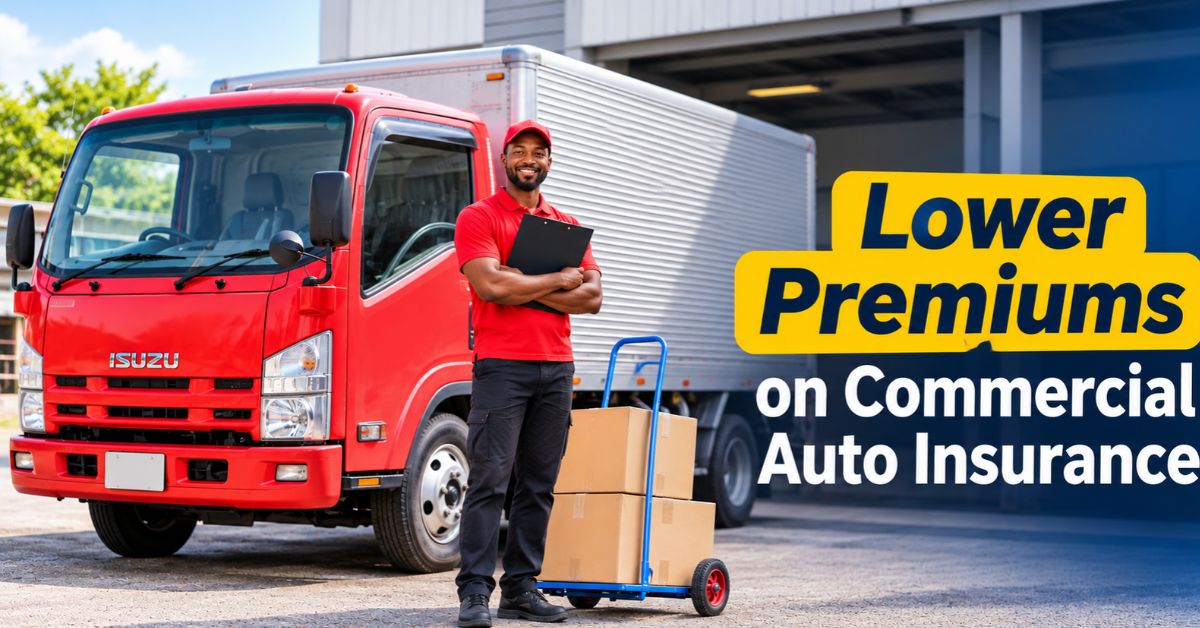
Owning a delivery business means keeping vehicles on the road for extended periods. Whether you transport groceries, parcels, restaurant orders, medical supplies or wholesale products, your vehicles may accumulate thousands of miles every month.
Unfortunately, this level of activity can make commercial auto insurance expensive. Insurance companies consider how frequently vehicles are used, the distances they cover, their operating locations, driver records and previous claims when calculating premiums.
However, high mileage does not automatically mean your business must accept expensive insurance indefinitely. You can take practical steps to manage the risks associated with frequent driving, demonstrate responsible fleet management and potentially negotiate better insurance rates.
Here are effective ways to lower commercial auto insurance premiums without compromising the protection your delivery business needs.
1. Understand What Is Driving Your Insurance Costs
Mileage is an important consideration because vehicles that spend more time on the road generally have greater exposure to accidents. However, insurers evaluate several other factors. These may include:
- Annual mileage per vehicle.
- Drivers’ ages and driving records.
- Types of goods being transported.
- Delivery locations and operating radius.
- Vehicle value and repair costs.
- Previous accidents and insurance claims.
- Number of drivers authorised to operate each vehicle.
For example, two delivery companies might each operate five vans covering 30,000 miles annually. However, one may have experienced drivers, organised routes and a good claims history, while the other has frequent accidents.
Their insurance premiums may differ considerably and understanding which factors influence your particular policy helps you identify where improvements could make a difference.
2. Optimise Delivery Routes to Reduce Unnecessary Mileage
Poorly organised delivery schedules often result in unnecessary journeys. Drivers may repeatedly cover the same roads, return to distribution centres unnecessarily or travel longer distances because deliveries are not properly arranged.
These additional miles increase fuel expenses, vehicle wear and exposure to road accidents. Consider using route-planning software to:
- Group deliveries within nearby locations.
- Arrange stops according to the shortest practical route.
- Avoid unnecessary return journeys.
- Identify traffic-heavy roads during peak periods.
- Assign deliveries according to vehicle locations.
However, shorter routes are not automatically safer. A poorly maintained road or accident-prone neighbourhood may present greater risks than a slightly longer highway journey.
The objective should be to reduce unnecessary mileage while selecting reasonably safe and efficient routes. Keep records of mileage improvements. If your insurer considers annual mileage and operating territory when calculating premiums, these records may support a request for a policy review.
3. Use Telematics to Demonstrate Safer Driving
Telematics technology can be particularly useful for businesses operating high-mileage delivery vehicles. These systems collect information about vehicle movements and driving behaviour. Depending on the equipment, they can monitor speeding, sudden braking, rapid acceleration, sharp cornering, vehicle location and distance travelled.
This information helps fleet managers identify risky driving habits before they result in expensive accidents. For example, if a driver regularly exceeds speed limits or brakes suddenly, management can investigate the problem and provide additional training.
Some commercial insurers offer discounts or usage-based insurance arrangements for businesses using approved telematics systems.
However, installing a GPS tracker does not automatically guarantee lower premiums. Ask your insurer whether it recognises your chosen system and whether its reports can influence your renewal price.
4. Introduce a Proper Driver Safety Programme
A well-maintained van can become expensive to insure if it is regularly involved in preventable accidents.
A practical safety programme should include:
Review driving records: Check employees’ driving histories before allowing them to operate company vehicles. Continue monitoring records where legally permitted.
Provide defensive driving training: Teach drivers how to maintain safe distances, anticipate traffic movements and respond to difficult road conditions.
Discourage distracted driving: Drivers should not handle phones or read delivery instructions while moving.
Address driver fatigue: Long delivery schedules can leave employees exhausted. Provide reasonable breaks and avoid unrealistic delivery deadlines.
Establish clear driving rules: Make speeding, reckless driving and unauthorised vehicle use unacceptable.
Also, review accidents and near-misses regularly. If several incidents occur at particular delivery locations, investigate whether route changes or additional precautions are necessary.
A documented safety programme can strengthen your position when negotiating insurance renewals.
5. Choose Vehicles With Lower Insurance and Repair Costs
The cheapest delivery vehicle to purchase is not necessarily the cheapest to insure. Insurance companies consider vehicle value, repair expenses, safety features, theft risks and intended business use.
When replacing or expanding your fleet, compare insurance estimates before purchasing. Pay attention to:
- Availability and cost of replacement parts.
- Anti-lock braking systems.
- Electronic stability control.
- Collision avoidance technology.
- Anti-theft equipment.
- Vehicle safety ratings.
A delivery business may save money by choosing practical, reliable vehicles instead of unnecessarily expensive models.
Also consider whether every vehicle needs the same cargo capacity. Using oversized commercial vehicles for small deliveries can increase operating costs without providing meaningful benefits.
6. Review Your Insurance Classification and Mileage Estimates
Your insurer needs accurate information about how your vehicles are used. If your business operations have changed since purchasing your policy, your original classification may no longer reflect your activities.
For example, a company that initially handled occasional local deliveries may have expanded into scheduled regional distribution.
Review the following details:
- The stated purpose of each vehicle.
- Annual mileage estimates.
- Delivery territories.
- Operating radius.
- Number of authorised drivers.
- Types of goods transported.
Never deliberately underestimate mileage to obtain a cheaper quotation. Incorrect information can result in additional charges or coverage complications. Instead, provide accurate records and ask whether your current classification reflects your actual operations.
If your business now operates within a smaller geographical area than originally declared, you may qualify for a different rating arrangement.
7. Compare Insurance Quotes Before Renewal
Remaining with the same insurance company for years does not guarantee that you are receiving the most competitive rate.
Different insurers evaluate commercial vehicle risks differently. One company may consider your delivery operations relatively high-risk, while another may have products designed specifically for small delivery fleets.
Request quotations from multiple insurers before renewing, however, do not compare premiums alone. Examine:
- Bodily injury and property damage liability limits.
- Collision and comprehensive coverage.
- Deductibles.
- Uninsured and underinsured motorist coverage, where applicable.
- Hired and non-owned auto coverage.
- Policy exclusions and restrictions.
A cheaper policy may have higher deductibles or important exclusions that make it unsuitable for your business. An independent commercial insurance broker can also help compare policies, particularly if you operate several vehicles.
8. Consider Increasing Your Deductible Carefully
A deductible is the amount your business agrees to pay towards a covered claim before the insurer pays the remaining eligible amount.
Depending on your policy, increasing your deductible may reduce your premium. For example, your business might receive a lower quotation by agreeing to pay $2,000 instead of $1,000 towards certain covered vehicle damage claims.
However, the savings must justify the additional financial responsibility. Before accepting a higher deductible, consider your accident history, the number of vehicles you operate and the amount of money available for unexpected repairs.
Never select a deductible that your business would struggle to pay.
9. Improve Vehicle Security and Maintenance
Insurance risks do not disappear when delivery vehicles leave the road. Commercial vehicles parked overnight in unsecured locations may be exposed to theft, vandalism and weather-related damage.
Consider keeping vehicles in secured parking facilities, installing approved anti-theft devices and using GPS tracking systems. You should also establish regular vehicle inspections.
Drivers should report worn tyres, faulty brakes, damaged lights and other mechanical problems before starting their routes. These measures help prevent avoidable accidents and vehicle losses.
Ask your insurer whether specific security improvements qualify for discounts.
10. Negotiate Your Renewal With Evidence
When your insurance policy approaches renewal, do not simply ask your insurer for a discount. Prepare evidence showing how your business has improved its risk management. Useful documents include:
- Recent mileage reports.
- Driver training records.
- Vehicle maintenance logs.
- Accident and claims history.
- Telematics reports.
- Updated delivery routes.
- Evidence of installed safety equipment.
Suppose your company has reduced unnecessary trips, improved driver supervision and recorded fewer preventable accidents.
These improvements provide a stronger basis for requesting a premium review than simply explaining that insurance has become expensive.
Ask your broker whether your improved operating record qualifies for better pricing, fleet discounts or alternative coverage arrangements.
Mistakes That Can Make Commercial Auto Insurance More Expensive
Underreporting annual mileage: Providing inaccurate information can create problems when an insurer investigates a claim.
Using personal auto insurance for commercial deliveries: Personal policies may exclude or restrict certain business activities.
Allowing unauthorised drivers to operate vehicles: Drivers who are not properly disclosed or covered can create serious insurance complications.
Removing essential coverage: Cutting important protection may leave your business responsible for substantial accident-related expenses.
Ignoring vehicle maintenance: Worn tyres, defective lights and faulty brakes increase accident risks.
Reducing premiums should never come at the expense of protecting your business.
Conclusion
High-mileage delivery operations naturally create additional insurance exposure, but expensive commercial auto insurance does not have to be an unavoidable business expense.
The most effective approach is to manage the risks associated with those miles. Improve delivery routes, monitor driving behaviour, maintain vehicles properly, review your insurance classification and compare quotations before renewal. Most importantly, keep records demonstrating how your business manages its fleet.
Insurers may not offer every delivery business the same discounts, but a well-managed fleet with documented safety improvements gives you a stronger position when requesting better rates.
Rather than concentrating exclusively on driving fewer miles, concentrate on making every mile safer, more productive and easier to justify when your insurance premium is reviewed.
Frequently Asked Questions
1. Does high mileage increase commercial auto insurance premiums?
It can, Insurers may consider annual mileage when estimating accident exposure and potential claims. However, mileage is only one of several rating factors.
2. Can GPS tracking reduce commercial auto insurance costs?
Some insurers offer discounts or usage-based pricing for businesses using approved GPS and telematics systems. However, discounts are not guaranteed.
3. Does reducing delivery routes lower insurance premiums?
It may help if route changes reduce annual mileage, operating radius or exposure to higher-risk locations. The actual effect depends on the insurer’s rating system.
4. How often should a delivery business review its commercial auto insurance?
Review your policy before every renewal. You should also notify your insurer when significant changes occur to your vehicles, drivers, mileage or business operations.
5. Can small delivery businesses qualify for commercial fleet insurance discounts?
Yes. Some insurers offer discounts or specialised pricing arrangements for qualifying small fleets. Eligibility depends on the insurer, number of vehicles, claims history and business operations.