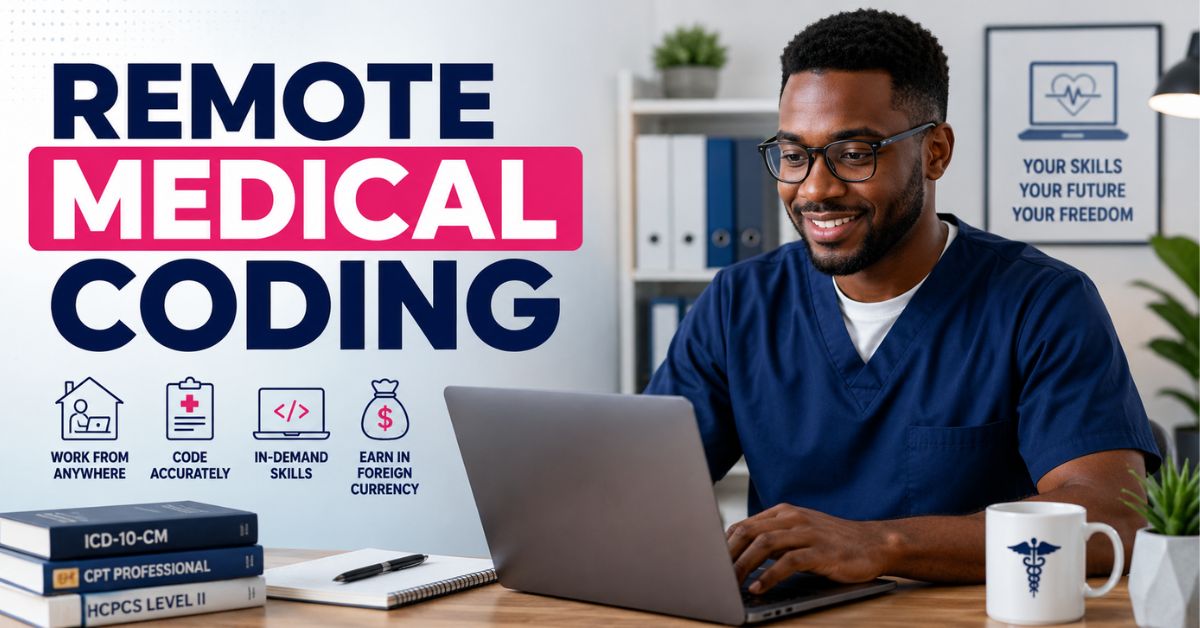
The healthcare industry is undergoing a massive digital transformation, and one of the biggest beneficiaries of this shift is medical coding. Hospitals, clinics, insurance companies, telehealth providers, and healthcare outsourcing firms across the world are increasingly hiring remote medical coders to manage patient records, process insurance claims, and ensure compliance with healthcare regulations.
For professionals in Nigeria and other African countries, this presents a remarkable opportunity to earn in foreign currencies while working from home.
Remote medical coding jobs are no longer limited to professionals living in the United States, Canada, or Europe. Today, many organizations outsource coding responsibilities to qualified professionals in Africa because of the continent’s growing pool of skilled healthcare workers and competitive labor costs.
If you have a background in health sciences, nursing, pharmacy, medical laboratory science, public health, anatomy, physiology, or even health information management, remote medical coding can become a rewarding career path.
In this article, we explore more than 30 remote medical coding jobs available to Nigerians and Africans, the skills required, expected salaries, and how to get started.
What Is Medical Coding?
Medical coding involves converting healthcare diagnoses, procedures, treatments, and services into standardized alphanumeric codes used by hospitals, insurance companies, and government agencies.
These codes help healthcare providers to:
- Process insurance claims.
- Maintain accurate patient records.
- Track diseases and treatments.
- Ensure compliance with healthcare regulations.
- Analyze healthcare trends and outcomes.
Medical coders commonly use coding systems such as:
- ICD-10-CM
- ICD-10-PCS
- CPT
- HCPCS Level II
- SNOMED CT
Medical coding professionals usually work closely with physicians, nurses, billers, and insurance specialists.
Why Remote Medical Coding Is Growing in Africa
Several factors have contributed to the rise of remote medical coding opportunities for Africans:
1. Global Healthcare Outsourcing
Healthcare organizations in developed countries are outsourcing coding tasks to reduce operational costs while maintaining quality.
2. Growth of Telemedicine
The expansion of virtual healthcare services has increased the need for digital documentation and coding professionals.
3. Increased Internet Accessibility
Improved internet infrastructure across Africa has made remote healthcare work more practical.
4. Availability of Qualified Healthcare Graduates
Nigeria and many African countries produce thousands of health science graduates every year who possess the medical knowledge required for coding careers.
30+ Remote Medical Coding Jobs Available in Nigeria and Africa
1. Remote ICD-10 Medical Coder
These professionals assign diagnosis codes using ICD-10 classification systems.
2. CPT Coding Specialist
Focuses on coding medical procedures and services performed by healthcare professionals.
3. Outpatient Medical Coder
Handles coding for patients who receive treatment without hospital admission.
4. Inpatient Medical Coder
Responsible for coding services provided to hospitalized patients.
5. Emergency Department Medical Coder
Codes emergency room visits and urgent care procedures.
6. Surgical Medical Coder
Specializes in coding surgical operations and procedures.
7. Radiology Coding Specialist
Handles coding for imaging procedures such as X-rays, CT scans, and MRIs.
8. Laboratory Coding Specialist
Codes laboratory tests and diagnostic investigations.
9. Pathology Medical Coder
Works with pathology reports and specimen examinations.
10. Oncology Medical Coder
Specializes in cancer-related treatments and procedures.
11. Cardiology Medical Coder
Focuses on heart-related diagnoses and treatments.
12. Orthopedic Coding Specialist
Handles coding for bone, joint, and musculoskeletal conditions.
13. Pediatric Medical Coder
Codes healthcare services delivered to children and adolescents.
14. Obstetrics and Gynecology Coder
Works with maternal health and reproductive healthcare records.
15. Mental Health Coding Specialist
Codes psychiatric evaluations, therapy sessions, and behavioral health services.
16. Telehealth Medical Coder
Specializes in coding virtual consultations and telemedicine appointments.
17. Dental Medical Coder
Handles coding for dental procedures and oral healthcare services.
18. Home Healthcare Coder
Codes healthcare services delivered in patients’ homes.
19. Rehabilitation Coding Specialist
Focuses on physiotherapy and rehabilitation services.
20. Insurance Claims Medical Coder
Prepares coded information for insurance reimbursement purposes.
21. Medical Billing and Coding Specialist
Combines coding duties with billing responsibilities.
22. Coding Compliance Auditor
Reviews coding practices to ensure regulatory compliance.
23. Clinical Documentation Improvement Specialist
Works with physicians to improve clinical documentation quality.
24. Risk Adjustment Coder
Assigns codes used in healthcare risk assessments.
25. HCC Coding Specialist
Specializes in Hierarchical Condition Category coding models.
26. Medical Records Coding Analyst
Reviews patient records and ensures coding accuracy.
27. Revenue Cycle Coding Specialist
Supports healthcare revenue management processes.
28. Healthcare Data Coding Analyst
Analyzes coded healthcare information for reporting purposes.
29. Medical Coding Quality Assurance Specialist
Ensures coding accuracy and consistency.
30. Medical Coding Trainer
Provides training to new coders and healthcare staff.
31. Remote Medical Coding Consultant
Offers coding expertise to hospitals and healthcare organizations.
32. Freelance Medical Coder
Works independently with multiple healthcare clients globally.
33. Contract Medical Coding Specialist
Accepts short-term project-based coding assignments.
34. Medical Coding Team Lead
Supervises teams of coders in large organizations.
35. Medical Coding Project Manager
Coordinates coding projects and ensures deadlines are met.
Skills Needed for Remote Medical Coding Jobs
Employers hiring remote medical coders often look for the following skills:
Medical Knowledge
Understanding human anatomy, diseases, treatments, and medical terminology is essential.
Attention to Detail
A single coding mistake can affect billing and reimbursement.
Knowledge of Coding Systems
Candidates should understand:
- ICD-10
- CPT
- HCPCS
- DRG systems
Computer Literacy
Medical coders work with electronic health records and coding software.
Communication Skills
Remote teams rely heavily on written communication.
Analytical Skills
Medical coders must interpret clinical notes accurately.
Certifications That Improve Employment Opportunities
Although some entry-level positions accept healthcare graduates without certifications, obtaining professional credentials significantly improves employability.
Popular certifications include:
- Certified Professional Coder (CPC)
- Certified Coding Associate (CCA)
- Certified Coding Specialist (CCS)
- Certified Inpatient Coder (CIC)
- Certified Outpatient Coder (COC)
Certified professionals generally earn higher salaries and attract international employers.
Who Can Become a Medical Coder?
Medical coding is suitable for:
- Nurses
- Pharmacists
- Medical laboratory scientists
- Public health graduates
- Anatomy graduates
- Physiology graduates
- Health information managers
- Medical doctors
- Dentists
- Community health professionals
Even individuals without healthcare degrees can transition into medical coding through specialized training programs.
Remote Medical Coding Salary in Nigeria and Africa
Income varies depending on qualifications, certifications, and clients.
Entry-Level Medical Coders
- $300 to $800 monthly
- ₦450,000 to ₦1,200,000 monthly
Mid-Level Medical Coders
- $800 to $2,000 monthly
- ₦1.2 million to ₦3 million monthly
Senior Medical Coders
- $2,000 to $5,000 monthly
- ₦3 million to ₦7.5 million monthly
Medical Coding Consultants
Experienced consultants may earn more than $6,000 monthly depending on contracts and specialization.
Where Nigerians and Africans Can Find Remote Medical Coding Jobs
Many international employers recruit remote coders through freelance and remote work platforms.
Popular places to search include:
- Healthcare outsourcing companies
- Remote healthcare staffing agencies
- Medical billing firms
- Telemedicine providers
- Freelance marketplaces
- Healthcare BPO organizations
- Hospital outsourcing departments
Networking on professional platforms and joining medical coding communities can also increase job opportunities.
How to Start a Remote Medical Coding Career
Step 1: Learn Medical Terminology
This forms the foundation of coding work.
Step 2: Study Coding Systems
Focus on ICD-10, CPT, and HCPCS coding structures.
Step 3: Obtain Certification
Professional certifications improve credibility and employability.
Step 4: Build Practical Experience
Practice coding sample medical reports and case studies.
Step 5: Create a Professional Resume
Highlight healthcare knowledge, certifications, and technical skills.
Step 6: Apply for Entry-Level Positions
Begin with internships, freelance projects, or junior coding roles.
Step 7: Continue Learning
Healthcare regulations and coding standards evolve regularly.
Challenges of Remote Medical Coding
While the profession offers many benefits, there are challenges to consider:
- Continuous learning requirements.
- Strict accuracy expectations.
- Tight deadlines.
- Time zone differences with foreign clients.
- Certification costs.
However, most professionals find that the long-term benefits outweigh these challenges.
Benefits of Working as a Remote Medical Coder
Remote medical coding offers several advantages:
- Flexible work schedules.
- Opportunity to work from home.
- Access to international employers.
- Earning potential in foreign currencies.
- Career growth opportunities.
- Reduced commuting expenses.
- Better work-life balance.
For many Nigerians and Africans, remote medical coding provides an opportunity to participate in the global healthcare economy without relocating abroad.
Future Outlook for Medical Coding in Africa
The future of medical coding in Africa looks promising. Healthcare digitization, insurance expansion, telemedicine growth, and increasing international outsourcing are expected to create even more opportunities for qualified coders across the continent.
Countries such as Nigeria, Kenya, Ghana, South Africa, Egypt, and Rwanda are witnessing significant growth in health technology adoption, creating an environment where coding professionals can thrive. As healthcare organizations continue to embrace digital transformation, demand for skilled remote coders is likely to increase substantially over the coming years.
Final Thoughts
Remote medical coding is gradually becoming one of the most accessible international healthcare careers for Nigerians and Africans.
Whether you are a nurse looking for an alternative career path, a fresh health sciences graduate seeking employment, or an experienced healthcare professional hoping to work remotely, medical coding offers a practical and lucrative option.
The key to success lies in acquiring the right knowledge, earning recognized certifications, and continuously improving your coding skills.
With determination and the proper training, you can build a successful remote medical coding career from Nigeria or anywhere else in Africa while serving healthcare organizations around the world.